Replication is the process by which copies of DNA are made.
It is done by DNA polymerase – How?
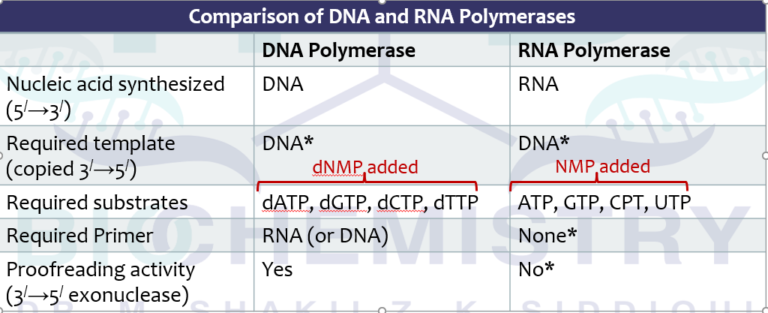
DNA polymerase does this by adding dNTPs to an existing chain.
How does it know which bases to add?
The DNA Polymerase adds it complementary to the existing template.
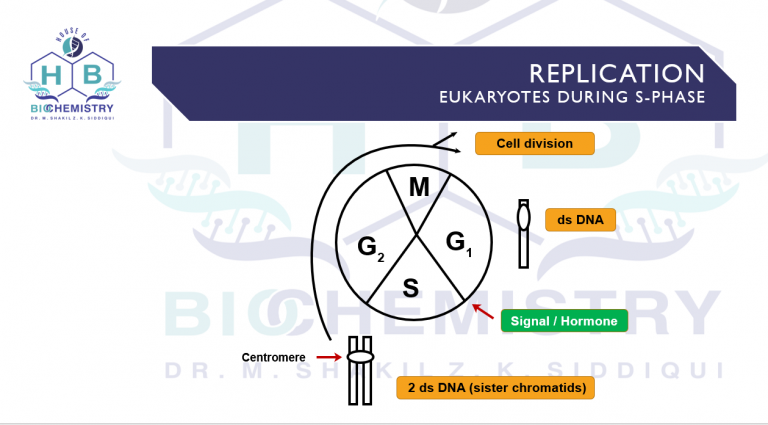
Where does replication begin?
It begins at origin of replication.
Prokaryotes have a single origin because they have a circular DNA and,
Eukaryotes have multiple origins of replication as they have a linear DNA which is much larger.
*dNTP-deoxy-nucleotide triphosphate.
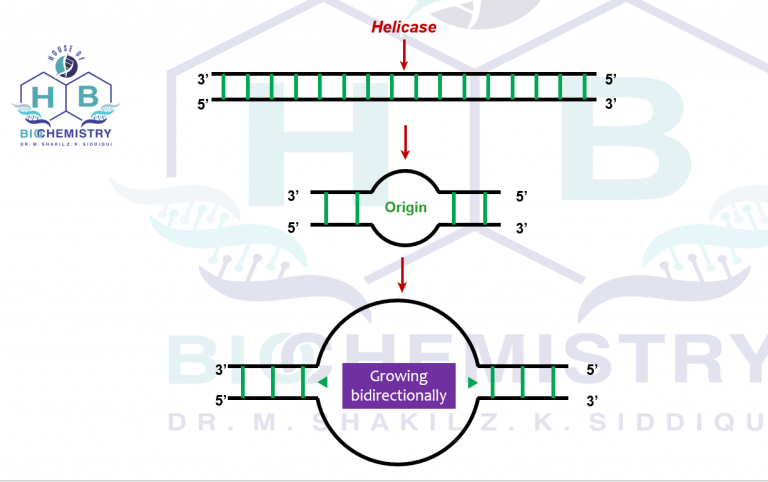
The first step in the replication in Eukaryotes is the formation of Replication bubble.
This is done by the enzyme Helicase.
The replication fork extends on both sides (Grows bidirectionally).
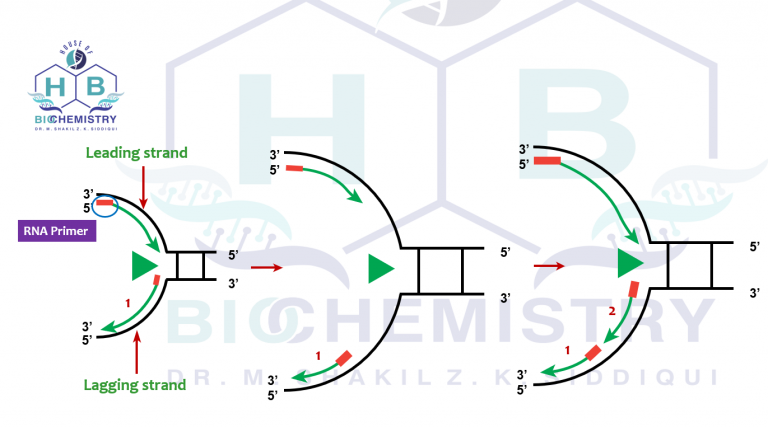
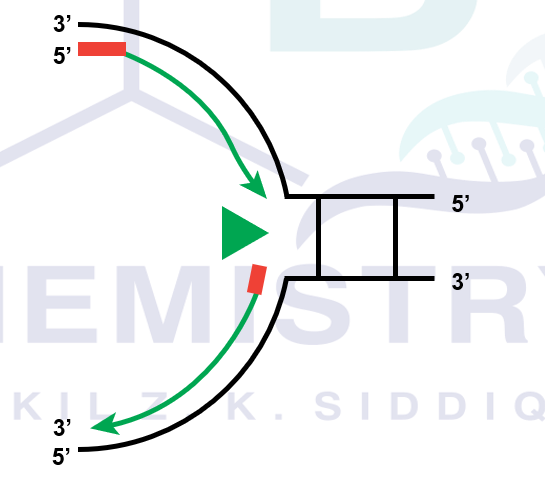
There is always one leading strand and one lagging strand in both directions.
Leading Strand is long and continuous and it goes into the replication fork.
Lagging strand moves away from the replication fork and it is discontinuous and in short fragments.
These fragments are called the Okazaki fragments. Eventually they will be joined together.
Primase synthesizes the primer (5 to 3’)
DNAP α & δ extend the primer, moving into the fork (Leading strand synthesis).
Helicase continues to unwind the DNA.
In lagging strand DNA is moving away from the replication fork.
As replication fork grows the lagging strands are placed one after other in short segments.
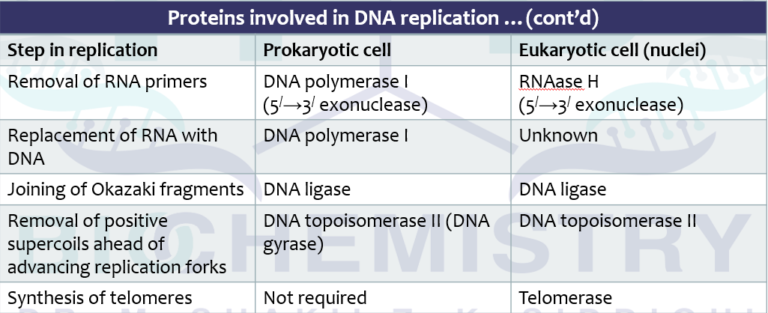
RNAase H (5’ exonuclease activity) digests the RNA primer.
DNA polymerase extends the fragment.
In eukaryotes there is an unknown DNA polymerase while in prokaryotes there is DNA polymerase I.
DNA ligase connects segment 1 & 2.
This whole process is repeated to remove all the RNA primers from both leading and lagging strands.
Easy to understand , great work!
Outstanding work Sir
Outstanding
You make it much easy for a med kid May Allah bless you
Comment *
Name*
Email*
Website
Save my name, email, and website in this browser for the next time I comment.
Δ



Easy to understand , great work!
Outstanding work Sir
Outstanding
You make it much easy for a med kid
May Allah bless you